Hard, Detailed Coloring Pages for Adults to Print
Printable grown-up coloring pages sorted into three levels, from moderate to advanced, with real pages from our free sets and what paper to print them on.
Search for adult coloring pages and most of what comes back is one of two things: mandalas, or a children's page with a few extra swirls added. Neither is what people mean when they ask for hard, detailed or difficult coloring pages. What they usually want is a subject they care about — a horse, an owl, a reef — drawn with enough real structure that coloring it takes an evening rather than ten minutes.
This guide sorts printable grown-up coloring pages into three levels, using real pages from our free collections so you can see the difference instead of taking a label on trust. Every page shown here is free to download as a PNG, and every set is also available as one PDF.
What actually makes a coloring page hard
"Hard" gets used loosely, so it is worth being specific. Four things decide how difficult a page is to color, and only one of them is the number of lines.
- Region count. More closed shapes means more individual decisions. A page with forty regions is a sitting; a page with four hundred is a project.
- Region size. Small regions need a sharp pencil or a fine-tip marker and a steady hand. This is where most of the difficulty lives.
- Texture drawn as line. Fur, feathers, scales and petals drawn as groups of lines give you something to build color into — and far more edges to stay inside.
- Overlapping subjects. A scene where fish swim in front of coral, which sits in front of more coral, forces you to decide what is in front of what, and to keep those layers readable with color alone.
A page can be dense without being hard. A mandala has hundreds of regions, but they repeat, so once you have colored one petal you have colored them all. Advanced realistic pages rarely repeat: every region is a slightly different shape doing a slightly different job.
Why realistic line art suits adult coloring
Most free coloring pages are drawn in a cartoon style, and for good reason — thick even outlines and big shapes are exactly right for a child with a crayon. We draw our own dinosaur and farm animal sets that way on purpose.
The same qualities work against adults. A cartoon page gives you a handful of large areas, so there is nowhere to blend, layer or shade; you fill a shape and move on. Proportions are exaggerated, so shading the way light actually falls on an animal looks wrong. And there is not much to look at once it is done.
Realistic line art is built differently. The subject keeps its real proportions and the markings that identify it, so a Maine Coon has ear tufts and a ruff, and a monarch has the vein pattern of a monarch. Outlines are bold on the main subject and lighter on the background, which gives the page depth without any gray. Fur and feathers are drawn as flowing line groups rather than shading, so you decide how dark or light each area should be. The result behaves more like a published nature coloring book than a printable from a kids' activity site.
If you want to see the two styles side by side on the same subject, we drew the same Labrador both ways.
Level 1: Moderate
Moderate pages are the right place to start if you are coming back to coloring after a long break, or if you want something you can finish in one sitting. The subject is still drawn realistically, but the regions are large and the background is light.
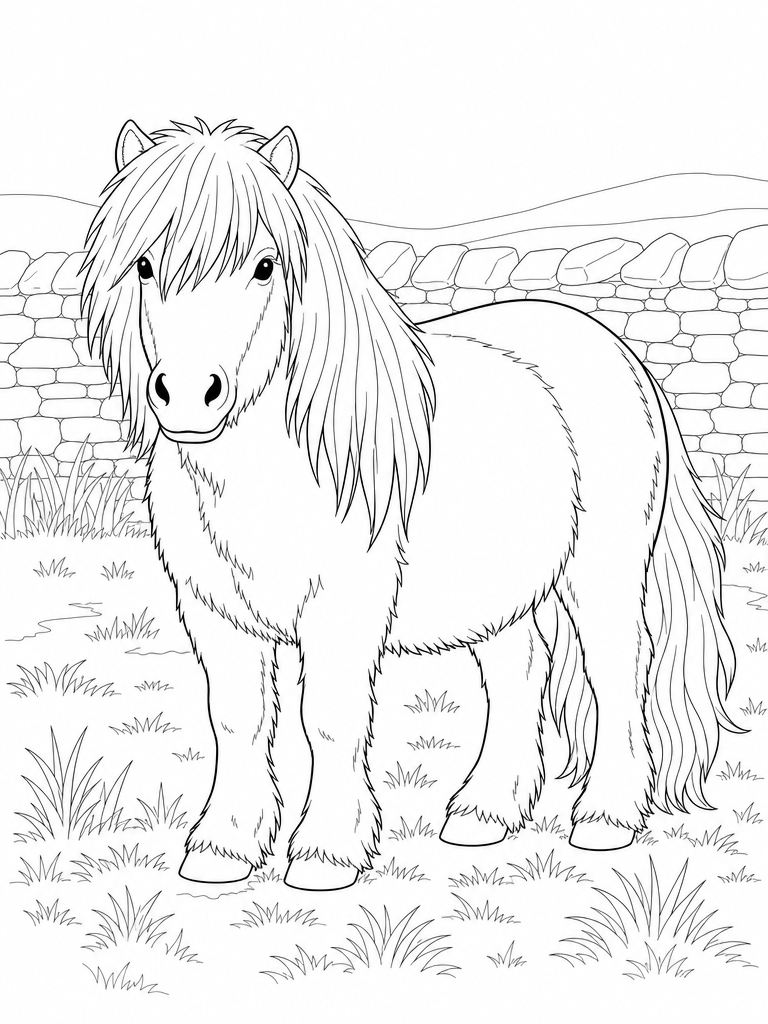
The Shetland pony from the horse collection is a good example: a shaggy coat and mane give you texture to work with, but the shapes are big and the field around it is simple.
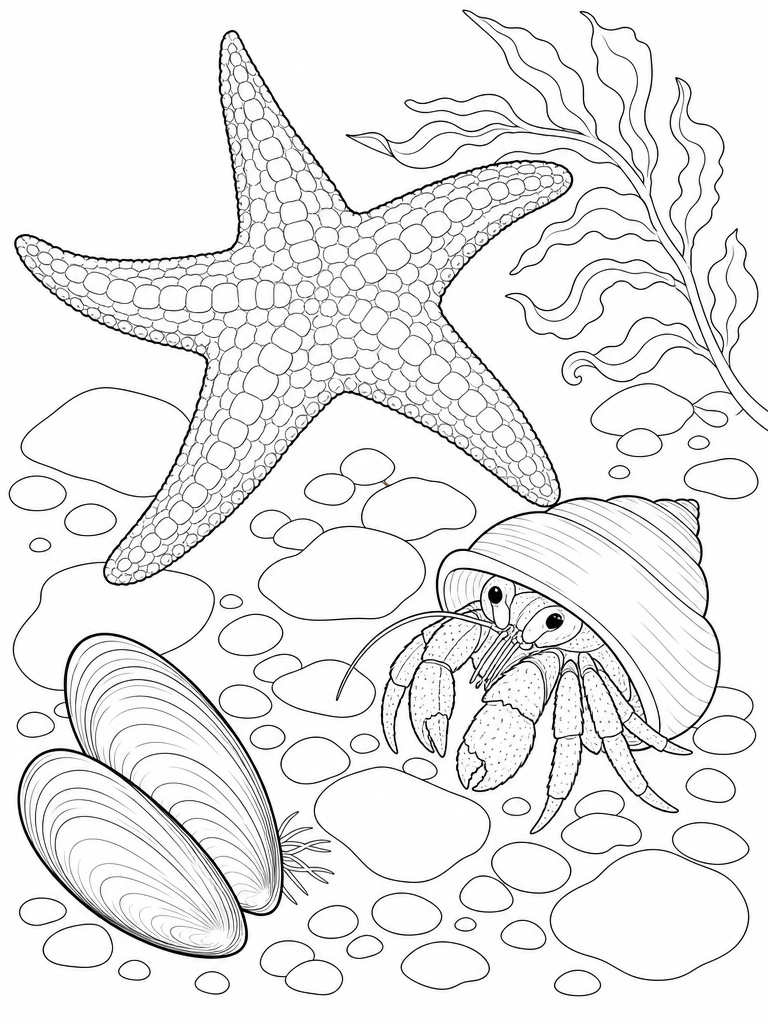
The tidepool from sea animals is drawn in large simple shapes — a starfish, a hermit crab, two mussels and a few pebbles — which makes it a relaxed page that still rewards careful color.
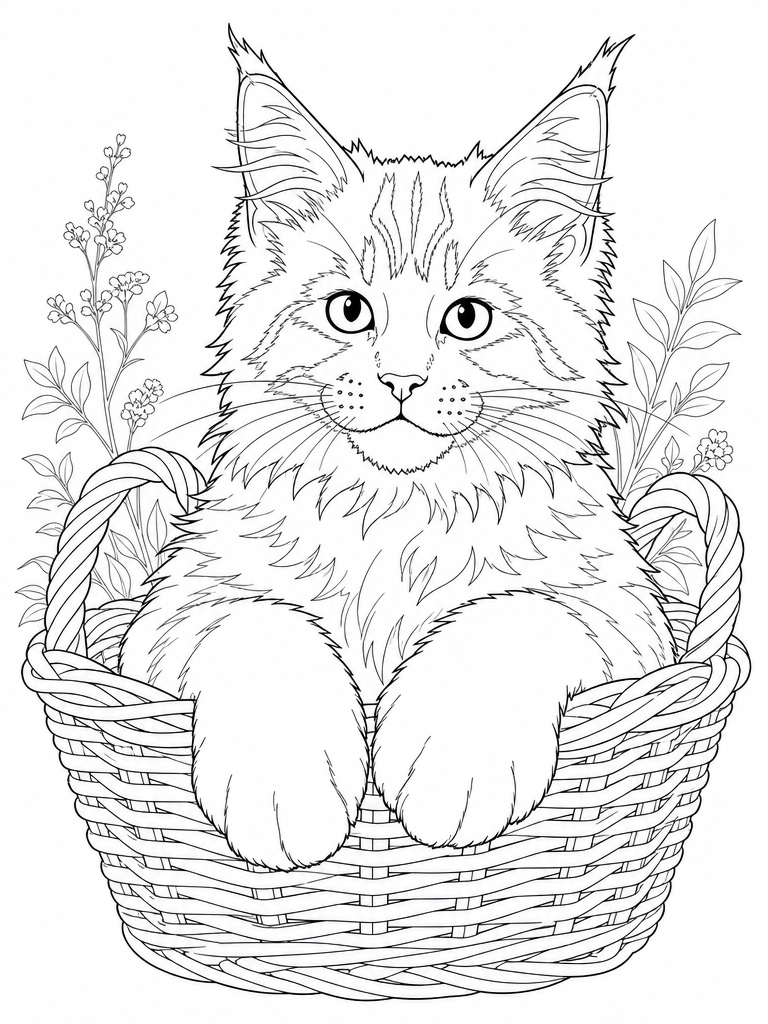
The Maine Coon kitten in the Maine Coon set has less fur detail than the adult cats and is one of the quicker pages in that collection.
Level 2: Detailed
Detailed pages add texture across most of the subject and a background that carries its own line work. These are the pages where colored pencils start to pay off, because there is room to layer two or three shades into one area.
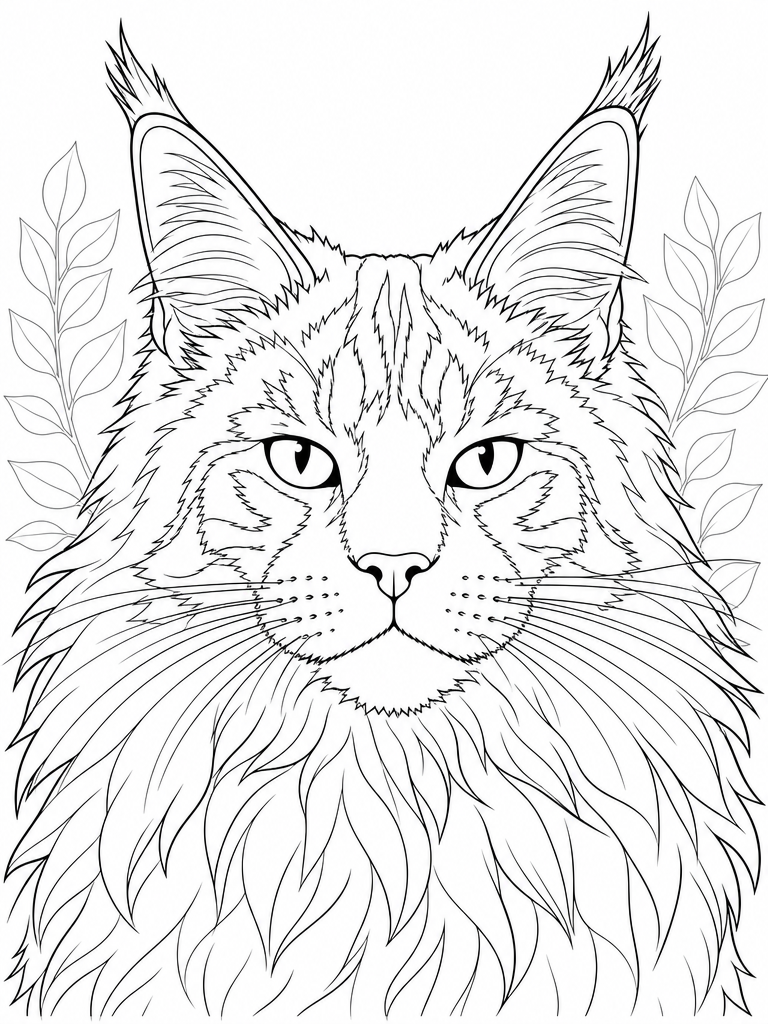
The Maine Coon portrait is one of the two most detailed pages in its set. The face, ear tufts and ruff are all drawn as fur, so a brown tabby coat can be built up stripe by stripe.
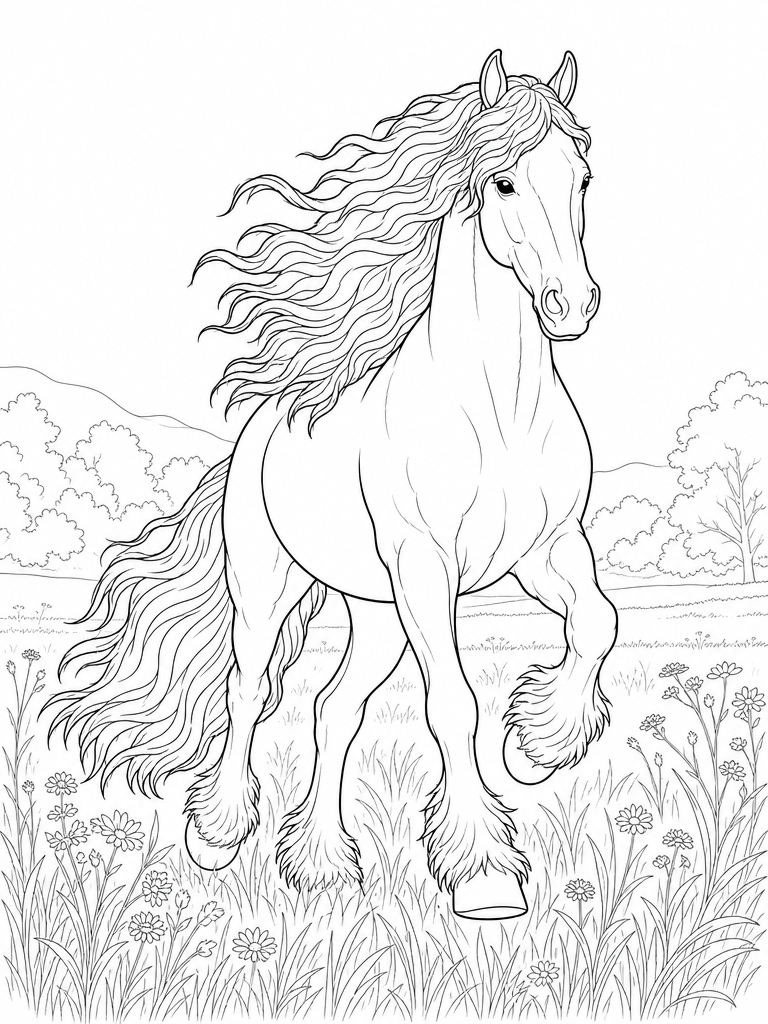
The Friesian is one of the most detailed pages in the horse collection: a trotting horse with its long mane flowing, the kind of page that takes a while to finish.
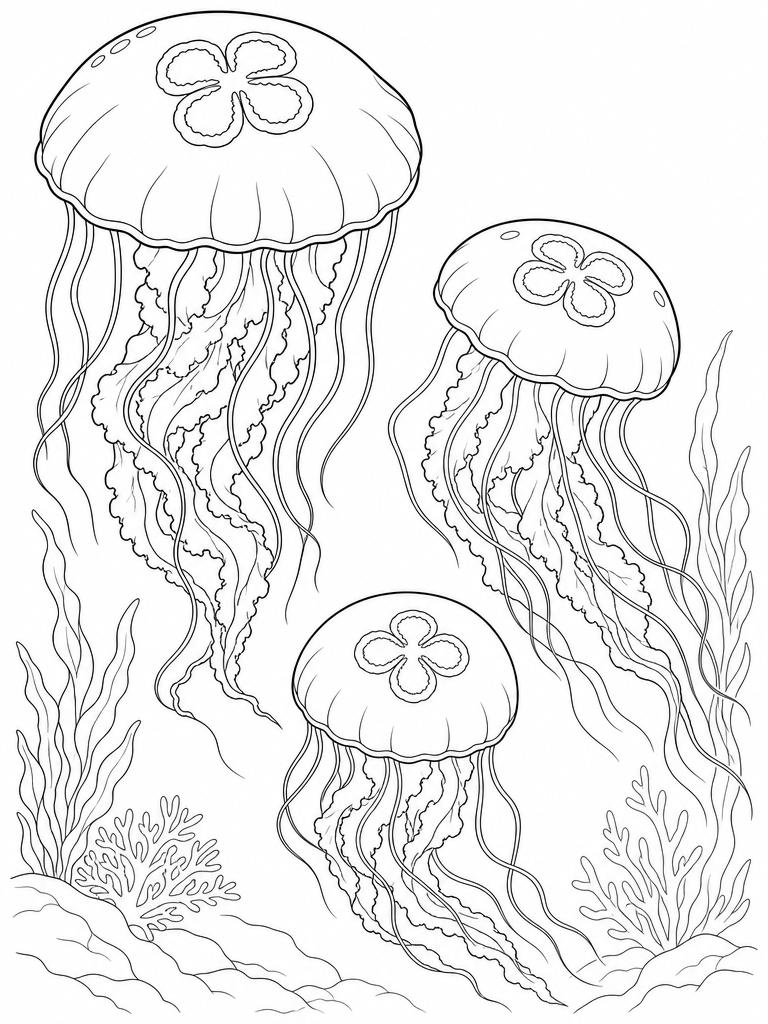
The moon jellyfish page looks simple at a glance, but the trailing tentacles are long and thin. Keeping three jellyfish at three different depths readable is mostly a color decision, which is what makes it harder than it looks.
Level 3: Advanced
Advanced pages are the ones people mean by hard coloring pages for adults: dense line work across the whole sheet, many small regions, and several subjects overlapping. Plan on more than one session.
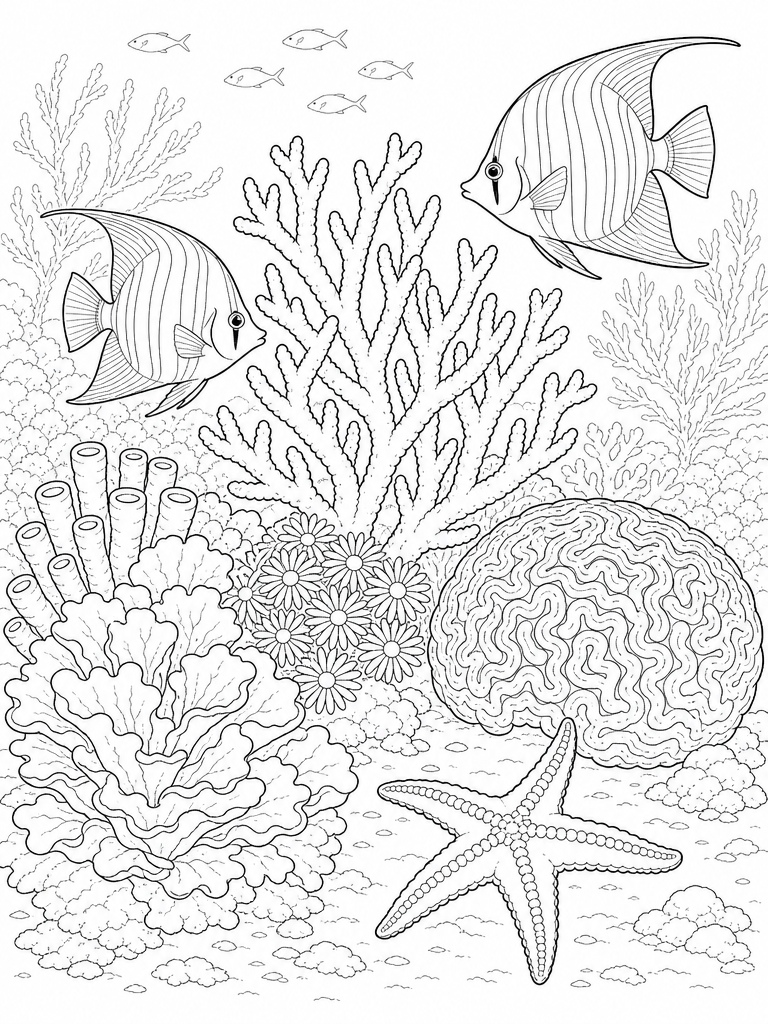
The coral reef is one of the most intricate pages in the sea animals set. Branching coral, brain coral, angelfish and a starfish all share one dense scene, so almost every part of the page is doing something.
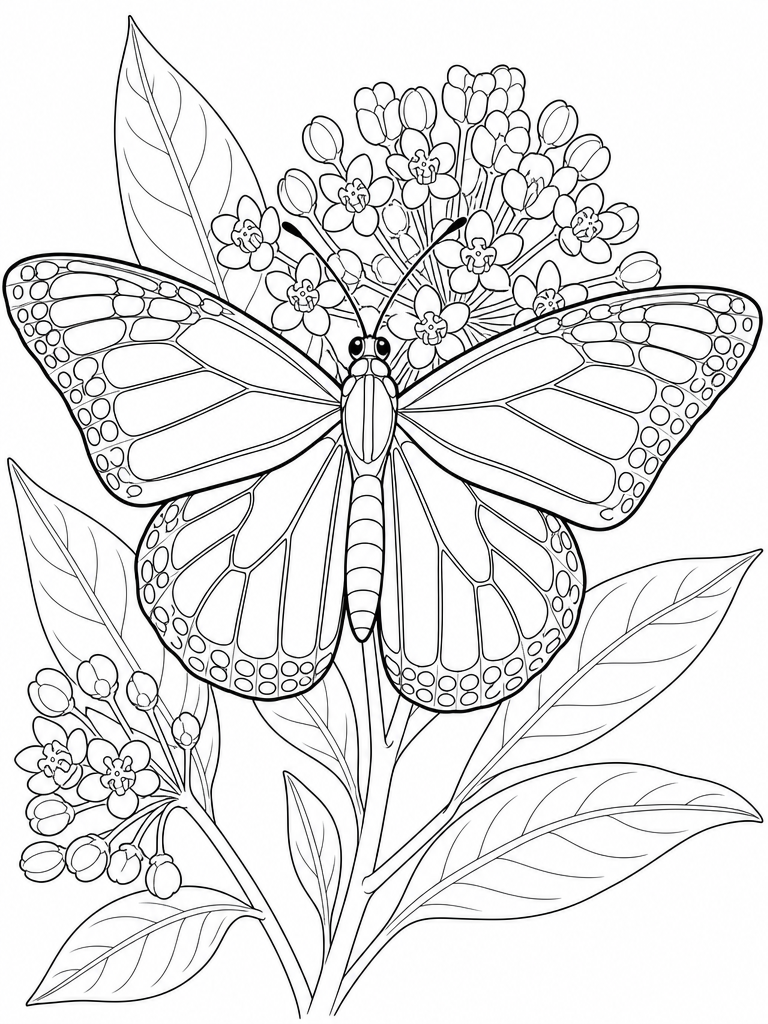
The monarch from the butterfly collection has one of the most intricate wing patterns in that set, and it sits on a milkweed flower cluster that adds a second layer of small shapes.
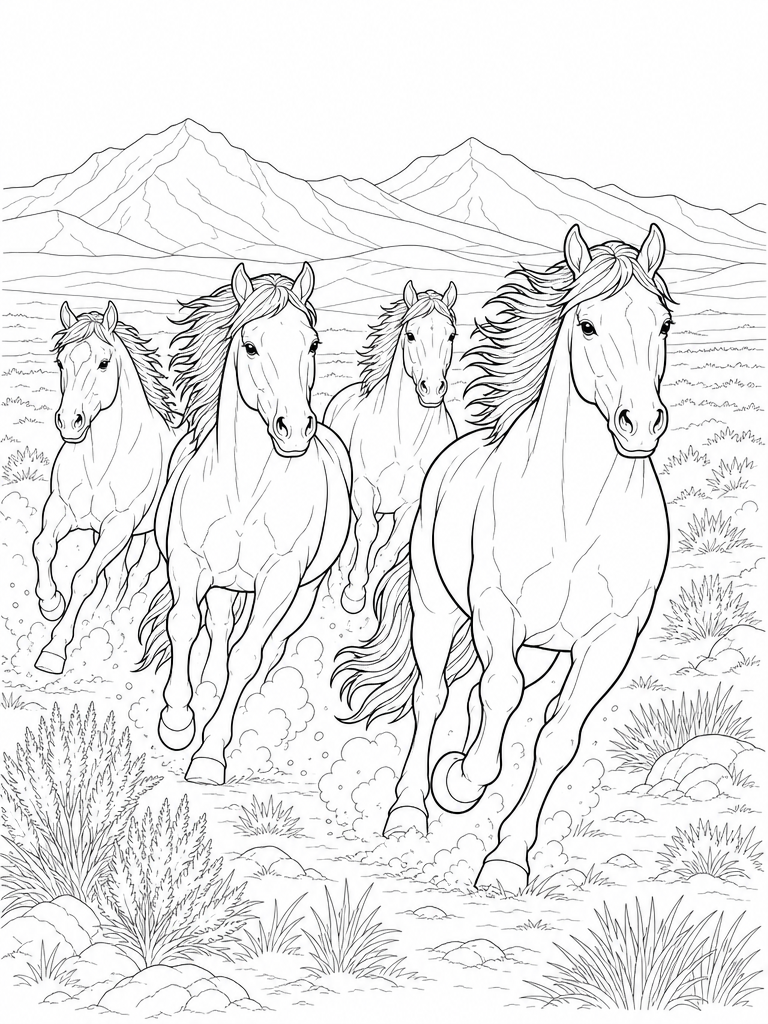
The wild mustang herd puts several horses in motion across the plains on one page. It is among the most detailed pages in the horse set and takes the longest to color.
Where to find more pages at each level
Every realistic collection mixes levels, so you do not need to hunt across sites. As a rough guide:
- Pets, one animal per page: the cat breeds, dog breeds and tabby cats sets. Each page centers on a single animal, which keeps most of them in the moderate-to-detailed range.
- Nature subjects: North American birds, drawn in classic field-guide style, and the botanical garden set of flowers, from layered garden roses to a hydrangea head made of small florets.
- Newest sets: fish sits at the detailed level, with scales and fin rays drawn as line on every species. Fall and autumn is drawn for adults, and its porch pumpkins, cozy cabin and sunflowers are detailed-to-advanced pages. Space runs from moderate, with Saturn and the comet, to detailed, with the space station and satellite.
- Advanced pages inside every set: the coral reef and octopus in sea animals, the monarch and peacock butterfly in butterflies, and the Friesian, Appaloosa and mustang herd in horses.
- For children, not adults: dinosaurs and farm animals are drawn in cartoon style with large, simple shapes. They are useful if you are coloring alongside a child and want pages you can both work on.
All of the collection pages are free for personal, classroom and library use.
Printing and paper for detailed pages
Detailed pages are less forgiving of the wrong paper than simple ones, because small regions take a lot of passes and a lot of ink. The short version of our home printing vs print on demand comparison:
- Colored pencils: ordinary copy paper is fine.
- Markers: print on cardstock. 65–110 lb is the useful range. Lighter paper lets marker ink show through, and alcohol markers go straight through it.
- Print single-sided. Nothing shows through from the back, and you can color right to the edge without ruining the next page.
- Print on demand is not the answer for markers. Print-on-demand books use standard book paper, which is fine for pencils but not for markers. If you are putting together a book of hard pages for someone who uses markers, printing at home on cardstock makes a better book.
A sharp pencil matters more on advanced pages than on any other. Most of the frustration people have with hard coloring pages comes from trying to fill a narrow region with a blunt point.
Make a detailed page from your own photo
The pages in these collections all come from the same drawing engine LineArt uses for books made from people's own photos. If there is a subject you would rather color — your own horse, the cat on the windowsill, a place you have been — you can turn a photo into line art in the same realistic style, at the level of detail you choose.
Or start with the free pages above. Print one from each level on the paper you plan to use. That is the fastest way to find out which level you enjoy most.